
Officials, however, said one person's thinking might not change the views of the institution.
Markets opened sharply lower on Tuesday, amid weak Asian cues, on concerns that the liquidity squeeze by the central bank would hurt growth and impact equity inflows.
The government had last week hiked diesel prices by Rs 5.63 a litre and capped the number of subsidised LPG cylinders to six per family a year.

As the global economy sways into uncertain territories and domestic prices almost certain to rise, Raghuram Rajan's ideas would have come in handy.

A cut in the CRR will help banks release their funds stuck with the RBI on which they do not get any interest from the regulator.

According to Subbarao, the lower your reserves dip, the more vulnerable you become.

Aiming to further expand the bilateral economic engagement, US Treasury Secretary Timothy Geithner would travel to New Delhi and Mumbai later this month for the third annual meet of the US-India Economic and Financial Partnership.
With RBI rate cut, loans are likely to be cheaper.

Recent slide in inflation no consolation amid exceptional shrinkage in industrial growth.

'The prime minister's comment on 'revdi culture' was welcome. But I am disappointed he did not follow up on that.' 'All political parties, including the BJP, have been guilty of this.' 'Now, Modi's guarantees, the Congress's 'nyay' path and both ruling and Opposition parties are vying with each other for freebies in my home state Andhra Pradesh.'
Brazil, Russia, India & China (known collectively as BRIC) on Sunday sought a re-balancing of representation on the executive board and the International Monetary and Financial Committee of the International Monetary Fund (IMF). The committee is the policy-making arm of the IMF.
Ahead of the G-20 Summit, Planning Commission Deputy Chairman Montek Singh Ahluwalia will lead a delegation to a preparatory meet on March 11 in London where deliberations on issues like liquidity crunch and reforms in international financial institutions are likely be taken up.
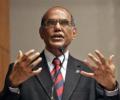
Is unhappy about banks' reluctance to pass on lower interest rates.
India had registered an economic growth of 6.7 per cent in FY'09 after posting over 9 per cent growth in the three preceding year, because of the global economic crisis.
Prime Minister Manmohan Singh today reviewed measures taken by the government to ease the liquidity crunch faced by India Inc arising out of the global financial crisis as well as discussed possible measures to help Indian exporters tide over the downturn in key markets like the US and Europe.
Financial Services Secretary Arun Ramanathan has been appointed as the Finance Secretary. "The Appointments Committee of the Cabinet has approved the appointment of Arun Ramanathan as Finance Secretary," an official statement said on Tuesday.

Subbarao pointed out that the non-banking financial companies could also play a significant role in deepening the process of financial inclusion. NBFCs can reach out where banks cannot, he added.
Policymakers have been grappling with high prices for food staples such as onions and potatoes even after the central bank raised interest rates by a quarter percentage point in each of its previous two reviews.

Continuing the upward march, inflation crossed 11 per cent in March in the final data, while this was only 9.9 in provisionally.
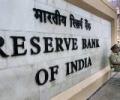
The Reserve Bank of India on Friday said it will come out with its annual monetary policy for the next fiscal on April 20, amid expectations that the central bank will hike interest rates to tame the rising inflation

The RBI has shelved its plan for polymer notes more than a decade after it invited interest from global manufacturers for one billion pieces of Rs 10 denomination polymer banknotes, reveals Tamal Bandyopadhyay.
The rate cuts are expected to infuse Rs 80,000 crore into the banking system.

Data released on Thursday showed prices of essential commodities like cereals went up by 12.7 per cent, rice by 11.75 per cent, wheat 12.6 per cent and pulses rose by 42 per cent.
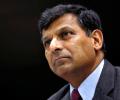
Rajan tells RBI colleagues he will be returning to academics

The RBI said that strong signs of fiscal consolidation are necessary to create a space for lowering policy rate without the risk of resurgent inflation.
The wholesale price index, coming below four per cent, may prompt the Reserve Bank of India to cut key policy rates. An indication was made by the RBI Governor D Subbarao in Tokyo on Wednesday. During the week, prices of manufactured items such as sugar, imported edible oil and textile items such as cotton yarn got cheaper.

Political funding of elections has led to the rise in black money in the economy.

The RBI governor-designate may be economical with spoken words, but is known for his sharp and critical writings
The RBI's assessment of the economy, presented as a prelude to the policy announcement, was relatively downbeat. Conceding the persistence of a hostile global environment and domestic weakness, the RBI expects GDP growth during 2009-10 to be 6 per cent. This is slightly higher than the 5.7 per cent that reflects the median of its external forecasters' survey.
The RBI cut interest rates on Friday by a quarter point for the third time since January.

The Reserve Bank of India chief also reviewed the high-level of inflation with the Finance Minister, ahead of the quarterly review of monetary policy next week, amidst expectations of another hike in key interest rates.
The stress of dealing with the crisis, often with potentially conflicting objectives in front of them, appears to have brought the differences between the finance ministry and the RBI back to the surface.
Reserve Bank of India Governor D Subbarao on Tuesday said that unwinding of excess liquidity would need to be carefully calibrated once the economy recovered.Comparing the RBI's steps with other central banks, Subbarao said the speed and scale of monetary response was more aggressive than many other countries.The RBI has lowered the repo rate, the rate at which it lends to banks, from a peak of 9 per cent to 5.5 per cent in less than five months.

The central bank raised statutory liquidity ratio, the portion of deposits that banks are required to keep in government securities, by 100 basis points to 25 per cent. Other key rates were unchanged.
The meeting comes ahead of a fresh stimulus package aimed at sectors not covered in the earlier measures announced by the central bank and the government.

Headline inflation was 8.98 per cent for March, while the food inflation was 8.76 per cent for the week ended April 16.
.jpg)
Tata Sons, India's biggest business group, and firms controlled by billionaires Anil Ambani and Kumar Mangalam Birla are among the 26 companies that have applied for licences to open banks.
India imports 80 percent of its oil, which adds to inflationary pressure.

The principal challenge for Rajan's successor is to work with the Bank Board Bureau and the finance ministry to complete these processes of banking reform.
The windfall from RBI may be used to trim borrowing, help fund Rs 3.3 lakh crore capex plan, capitalise banks and provide fiscal stimulus to some stressed sectors, experts and economists said.
